Quarterly Reports
- OISC LFA Efforts: 2025 Quarter 1
- OISC LFA Efforts: 2025 Quarter 2
- OISC LFA Efforts: 2025 Quarter 3
- OISC LFA Efforts: 2025 Quarter 4
- OISC LFA Efforts: 2026 Quarter 1
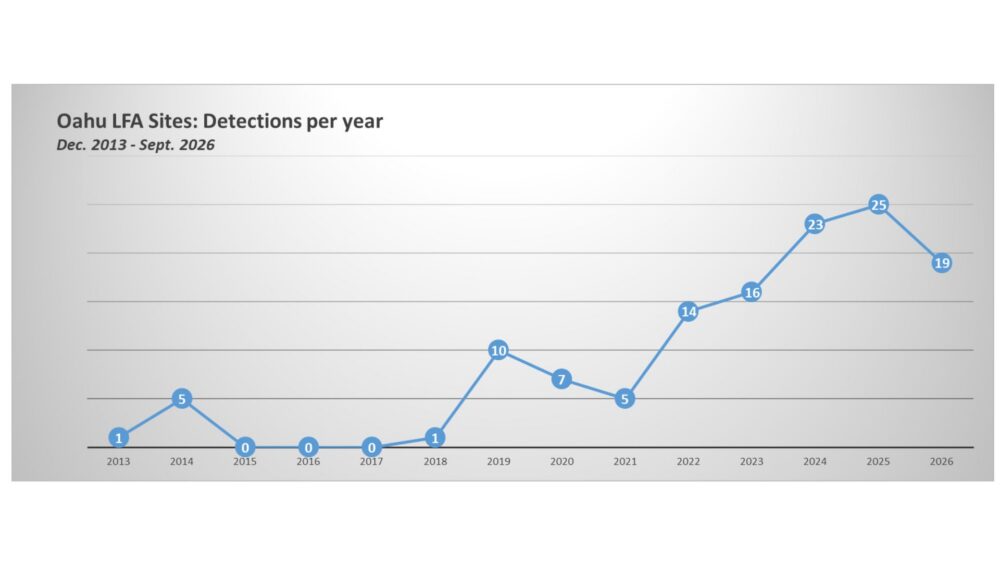
Detections through the years…
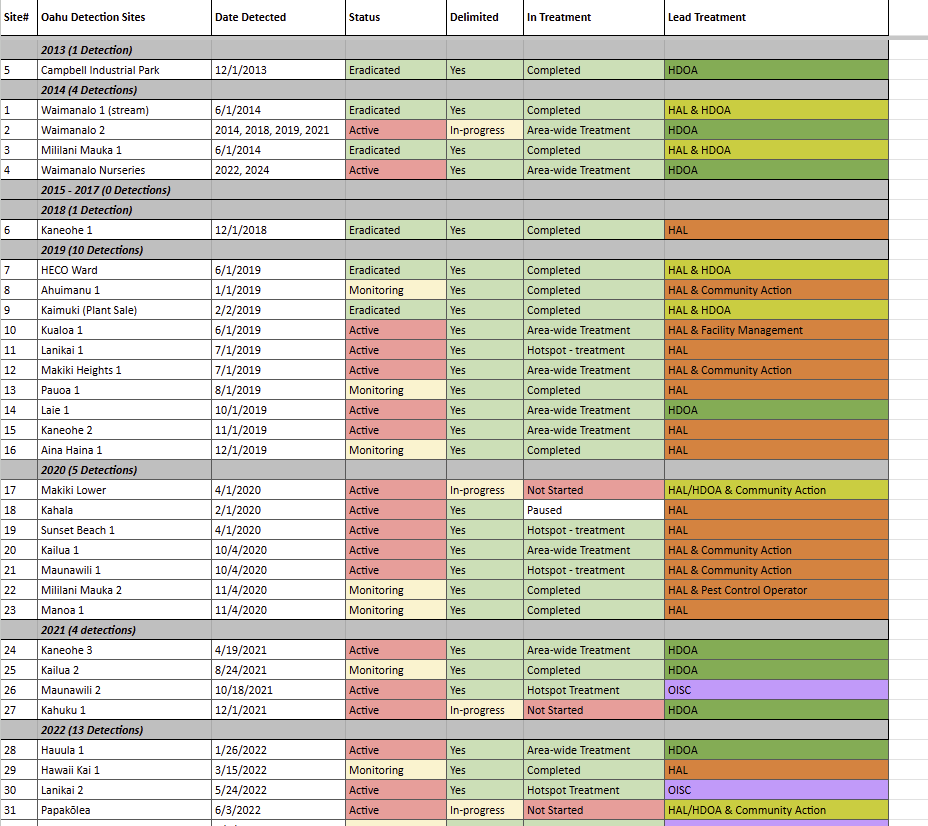
The progression of detections on Oʻahu has been increasing since the first find in December 2013.
It is important to address LFA detections with treatments to slow the spread and prevent island-wide establishment.
For statewide summaries and island updates, visit: www.stoptheant.org
Whatʻs being done?
OʻAHU RESPONSE:
A COLLABORATIVE EFFORT: The limited capacity of any single agency doesn’t meet the response needs of detections on O’ahu. The response is a combined effort among several organizations.
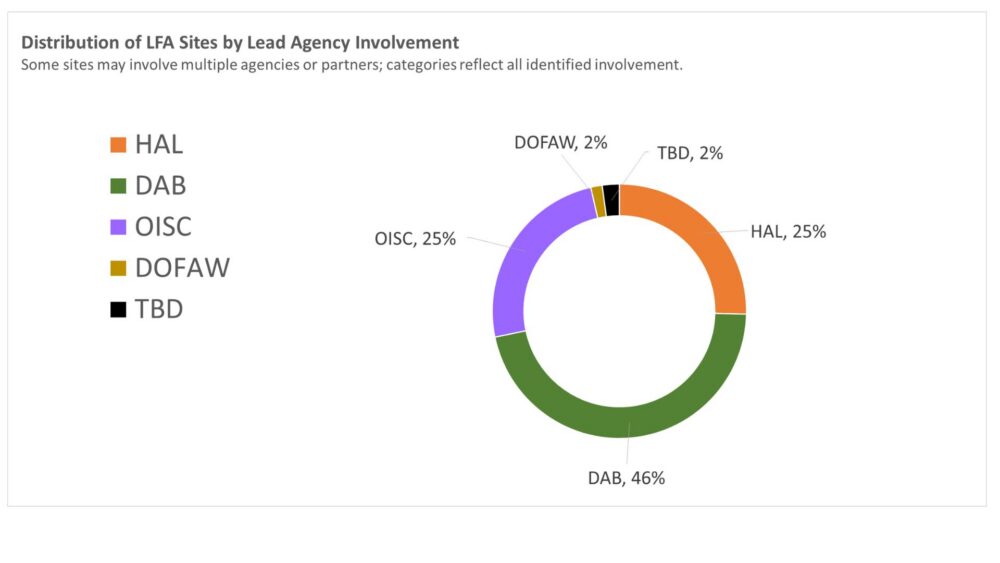
The LFA response on Oʻahu is being led by four organizations (with the support of partners and community members): the Hawaiʻi Ant Lab (HAL), the Oʻahu Invasive Species Committee (OISC), the Hawaiʻi Department of Agriculture & Biosecurity (DAB), and the Department of Forestry & Wildlife (DOFAW).
Each organization has different funding mechanisms (access to grants, state funds, federal funds), capacity, and expertise. No single agency has the resources to tackle every detection, so the work is shared.
DAB: Maintained residential yards, businesses & nurseries, inspections
OISC: Private property: residential (both maintained & forested), challenging terrain, non-Forest Reserve lands.
HAL: Maintained residential yards, farms, ranches, and extension programs and trainings.
DOFAW: Forest Reserves (FR) and may assist on adjacent FR land.
Support from partners: all the above organizations have received “boots on the ground” support from Hui O Koʻolaupoko, BWS, USFWS, CGAPS, HISC, and numerous community members and volunteers.
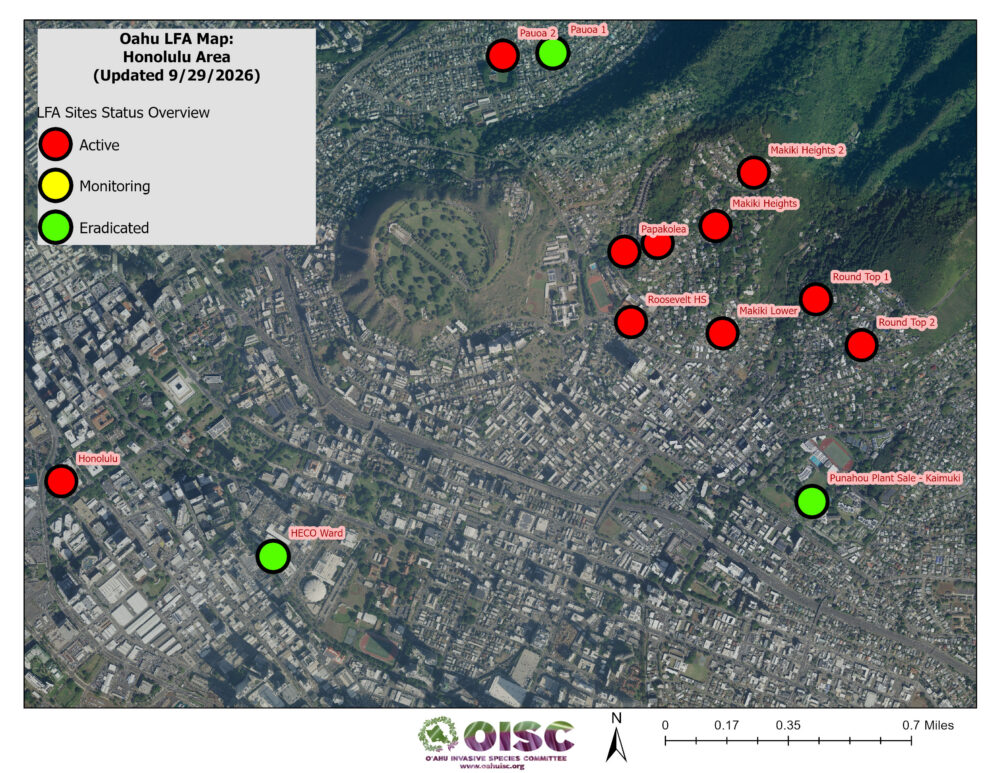
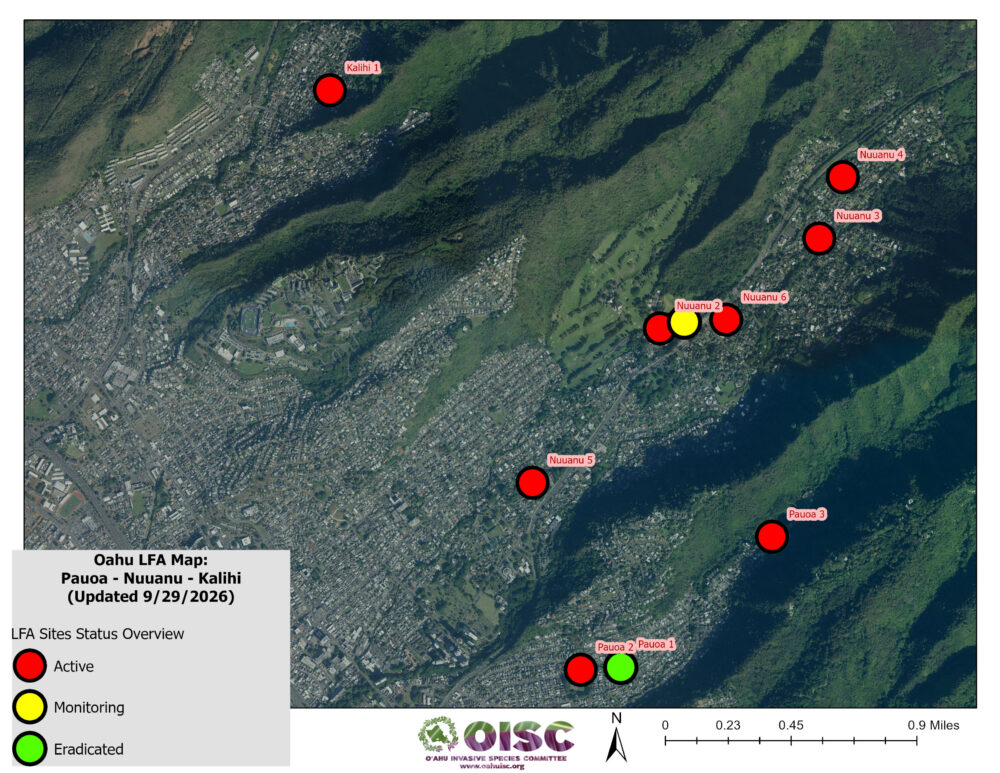
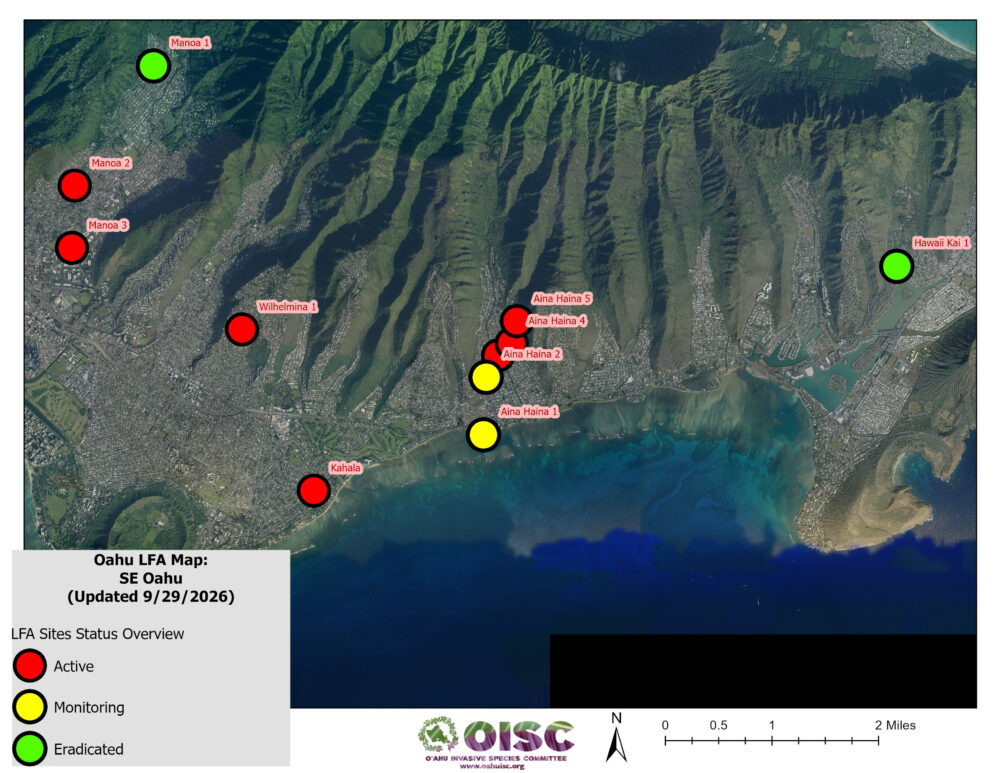
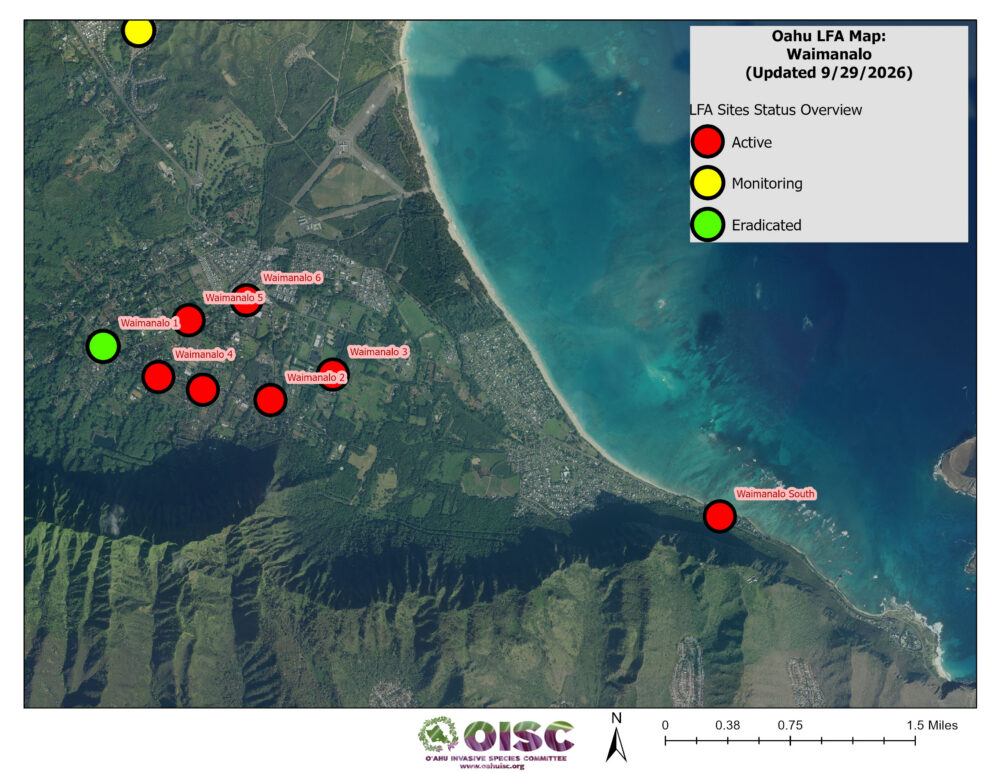
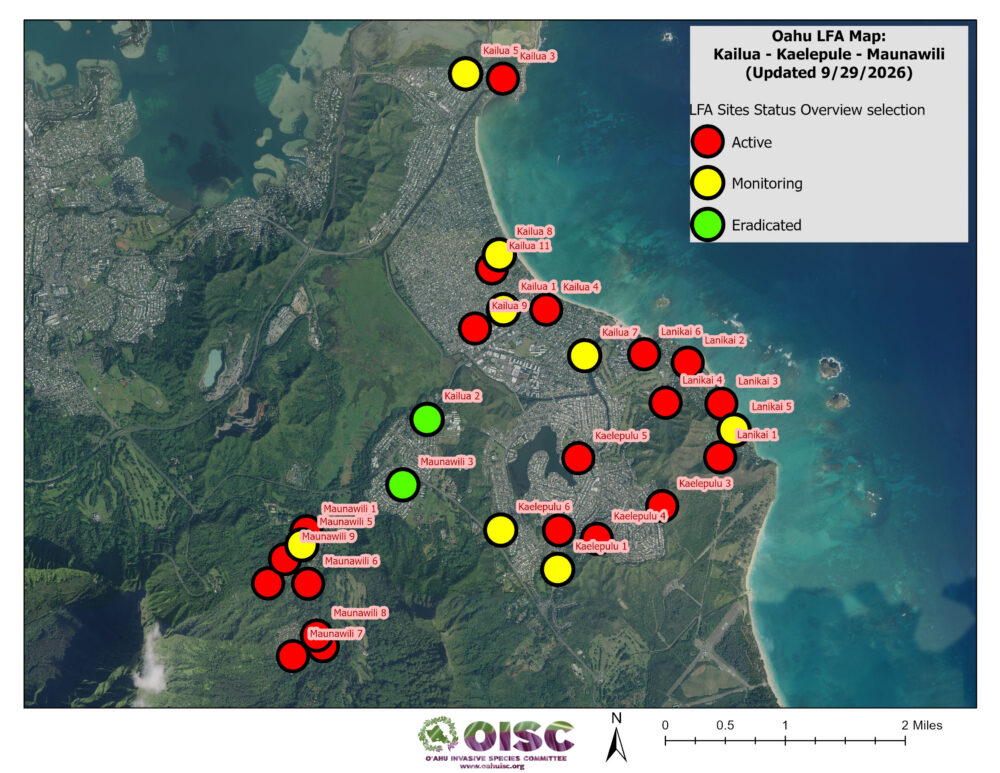
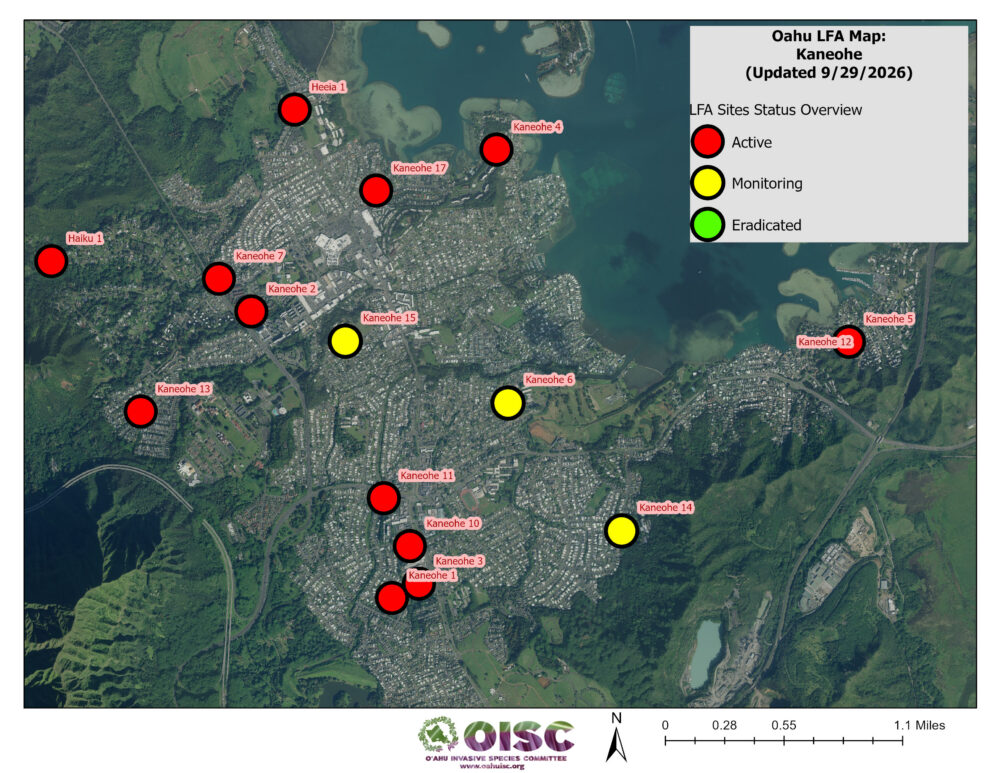
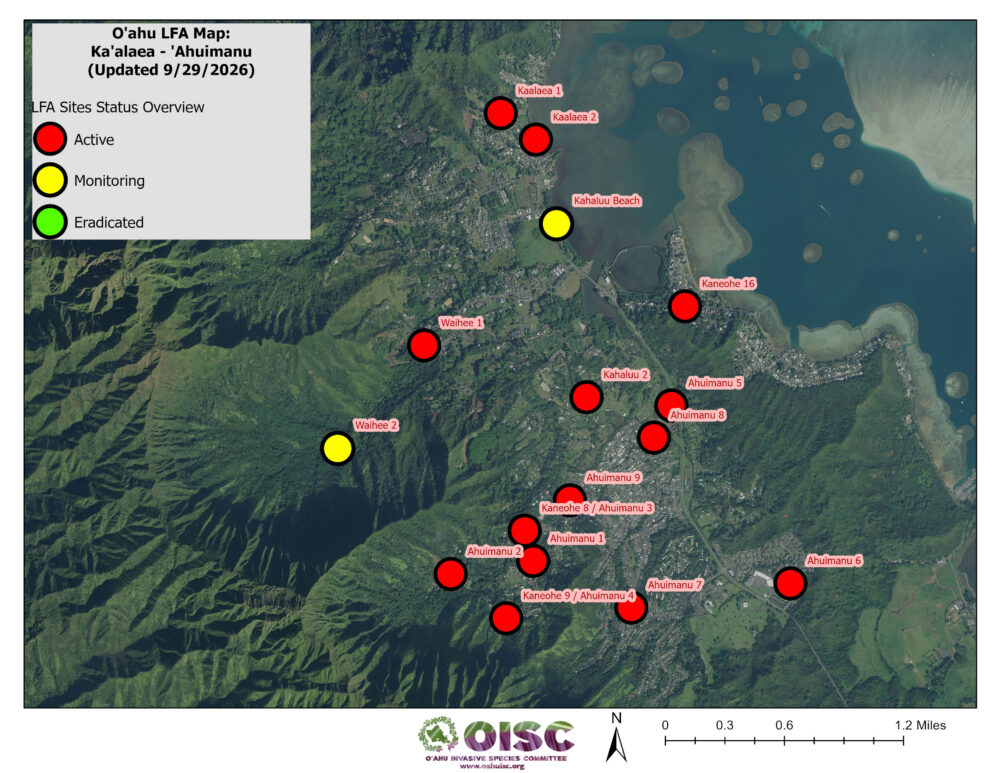
Who’s doing what…and where?
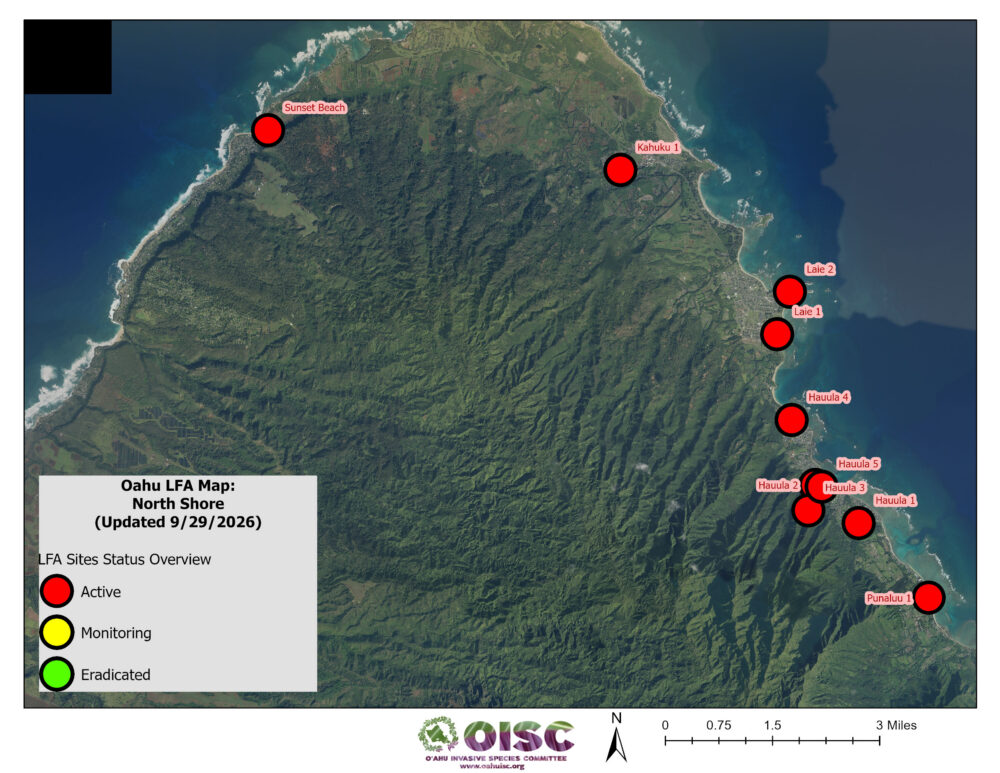
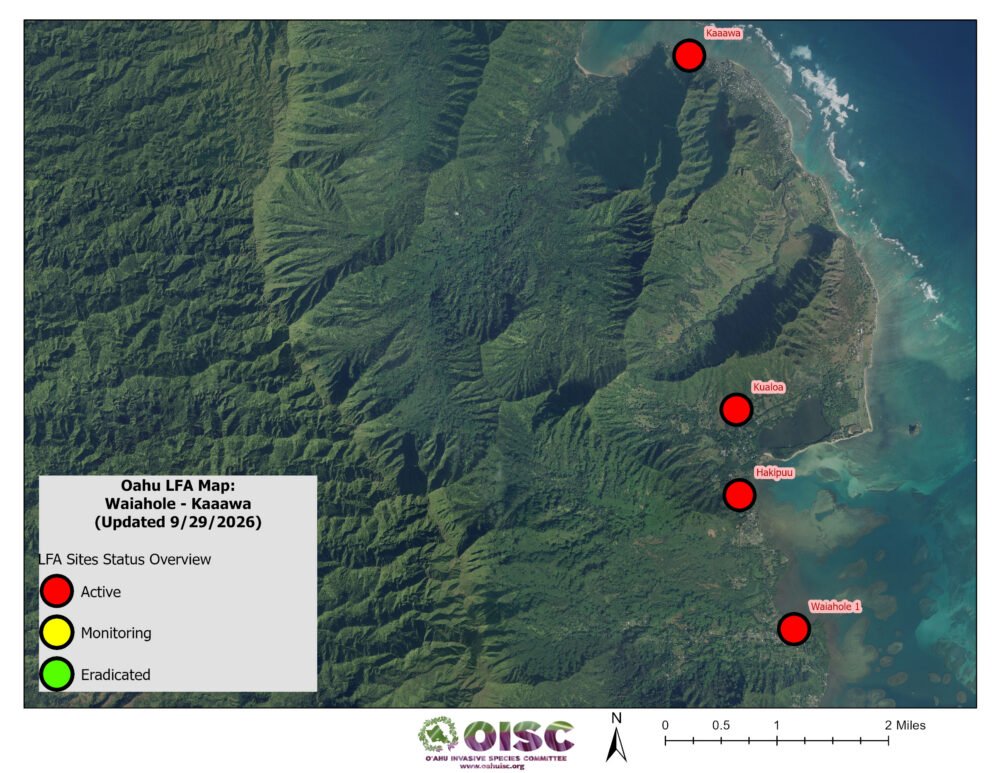
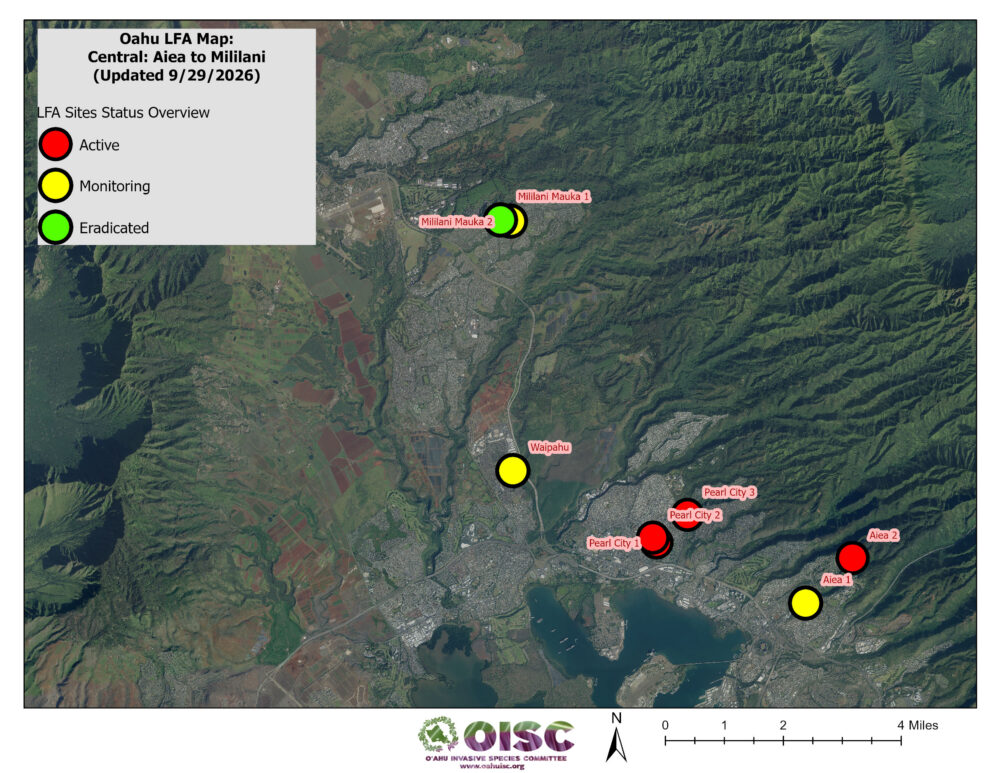
The limited capacity of any single agency doesn’t meet the response needs of detections on O’ahu. As the number of detections grows, the response is a combined effort among several organizations and community leaders using the divide-and-conquer approach.
With the help of partners and the affected communities, we are working together to get all detections into treatment and eradicate each infestation.

What is OISC doing?
OISC funding for LFA work was implemented in September of 2024 and is geographically specified for the Koʻolaupoko area of windward Oʻahu through a DOD REPI grant. Since then, we have been working through a backlog of sites from Kahaluʻu to Kailua.
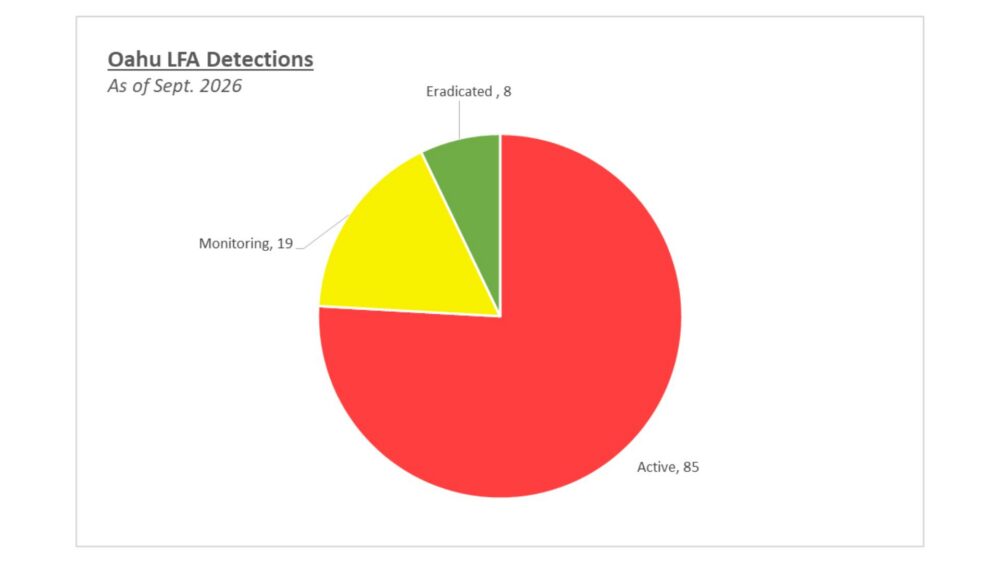
We are working to get them surveyed to find the edges of the infestation (delimiting) and begin the treatment cycle. Below is a list of our sites and their status.
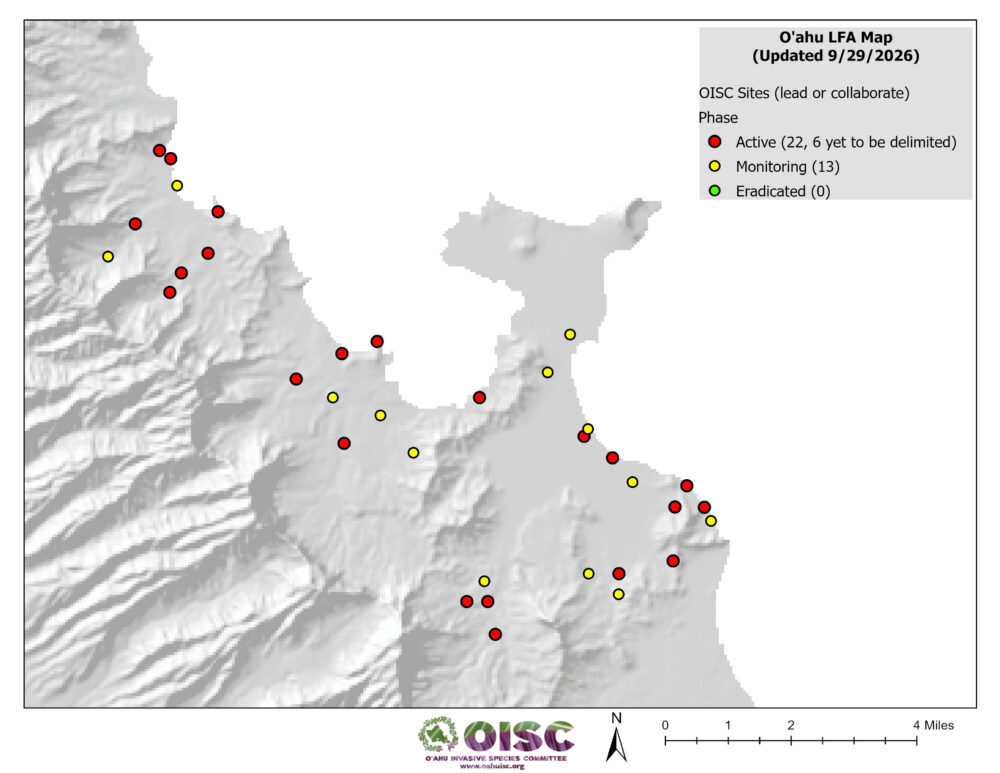
Updated September 2026