OISC works island-wide to detect, control, and eradicate our target species. Invasive species aren’t contained by property lines, so OISC works on both private and public lands to prevent incipient pests from becoming widespread problems.
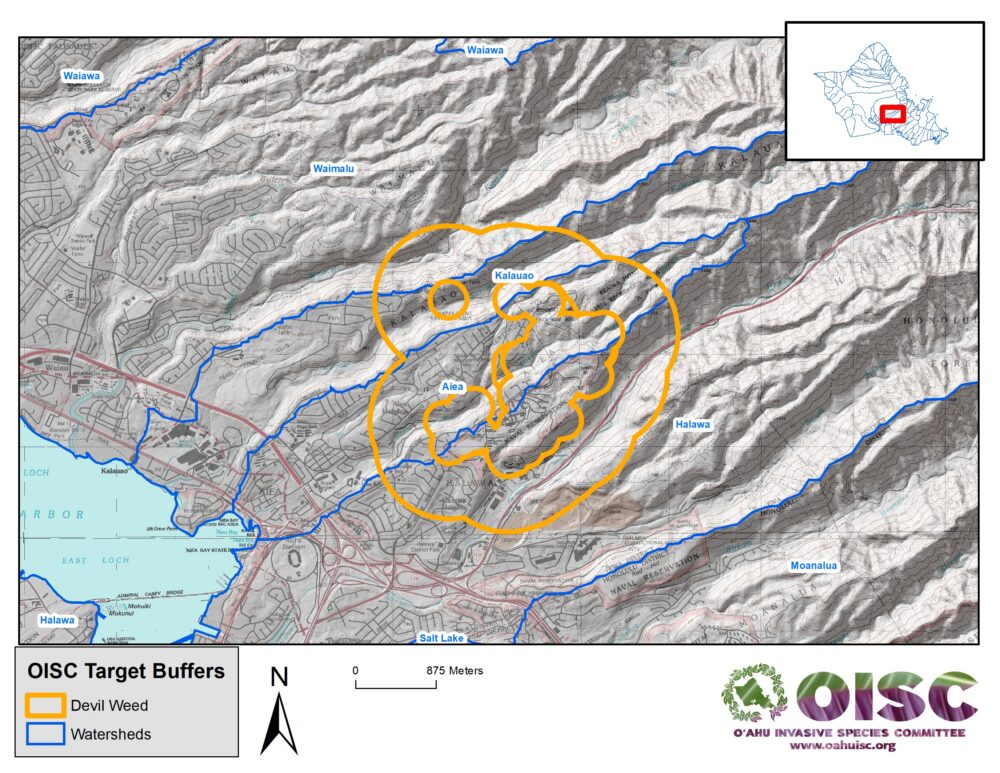
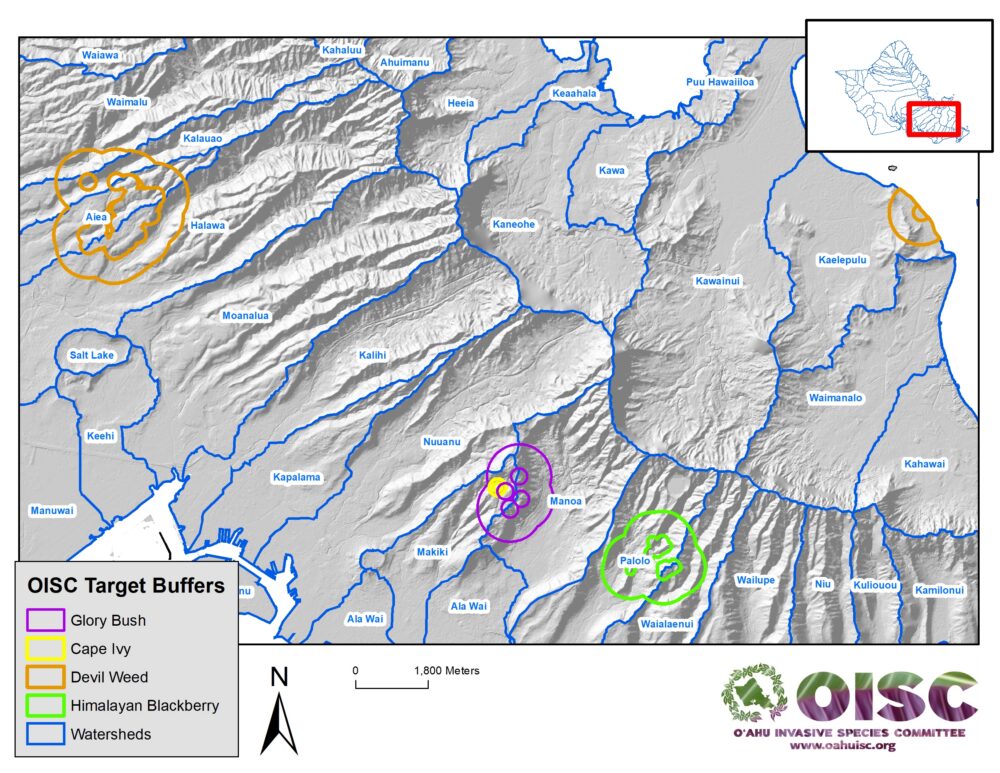
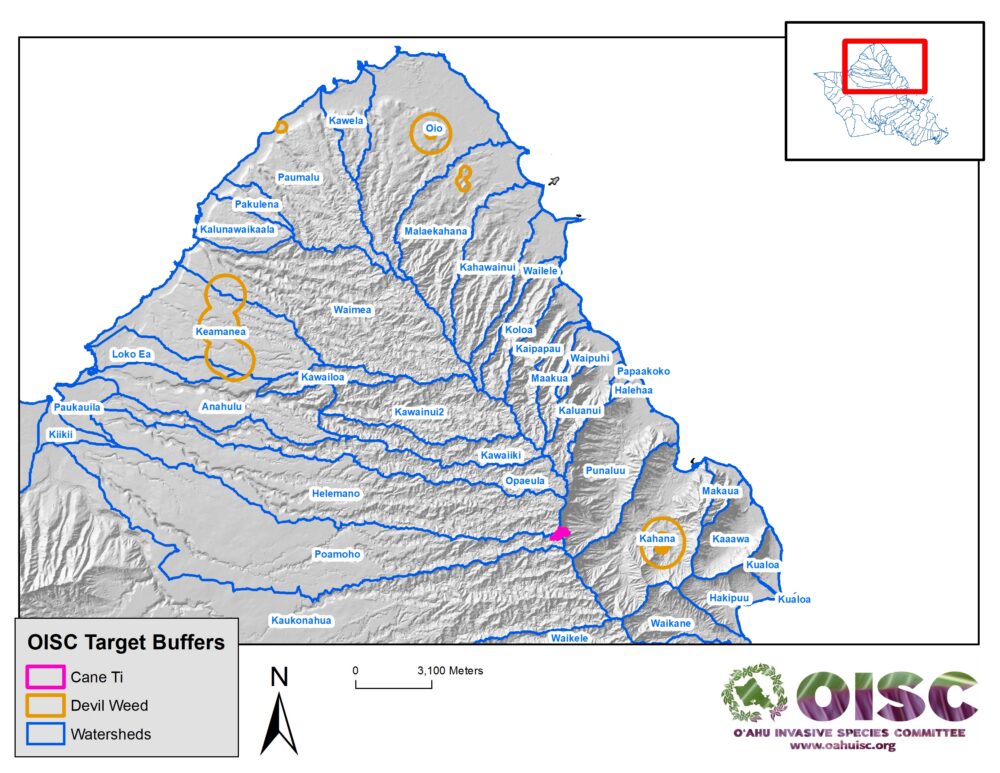
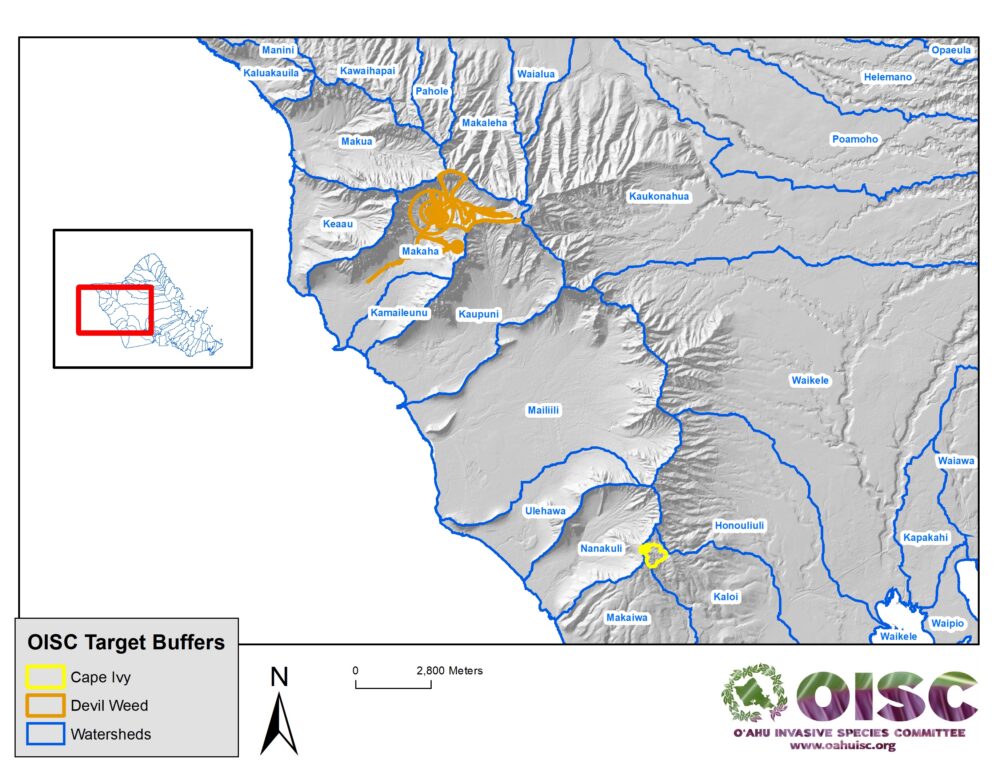
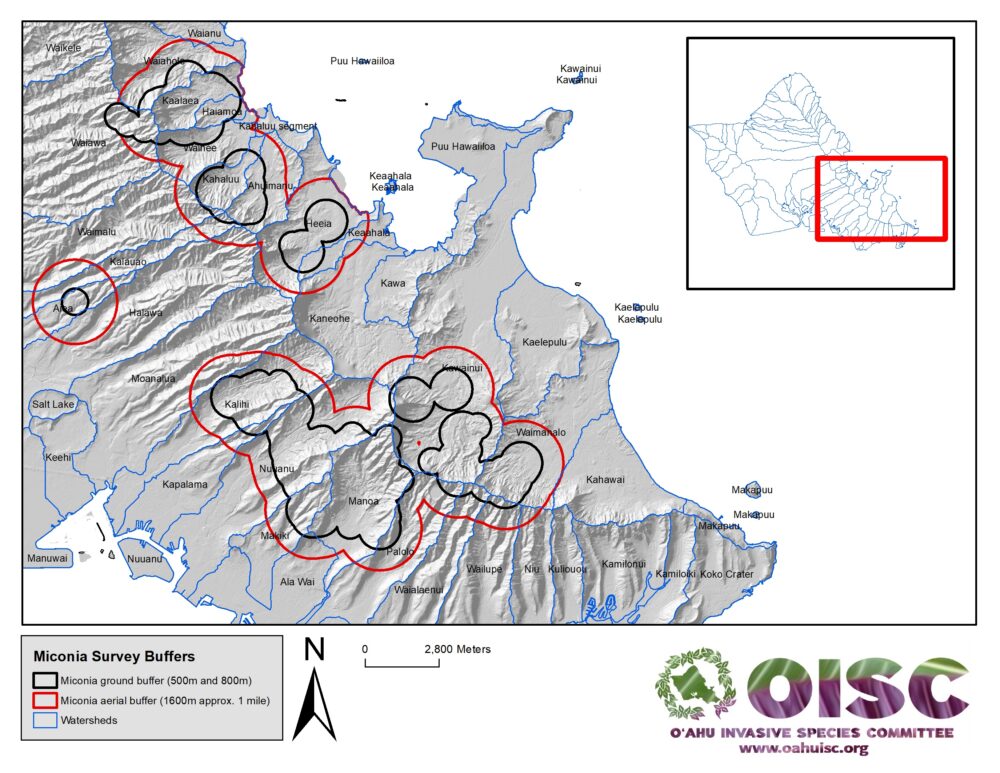
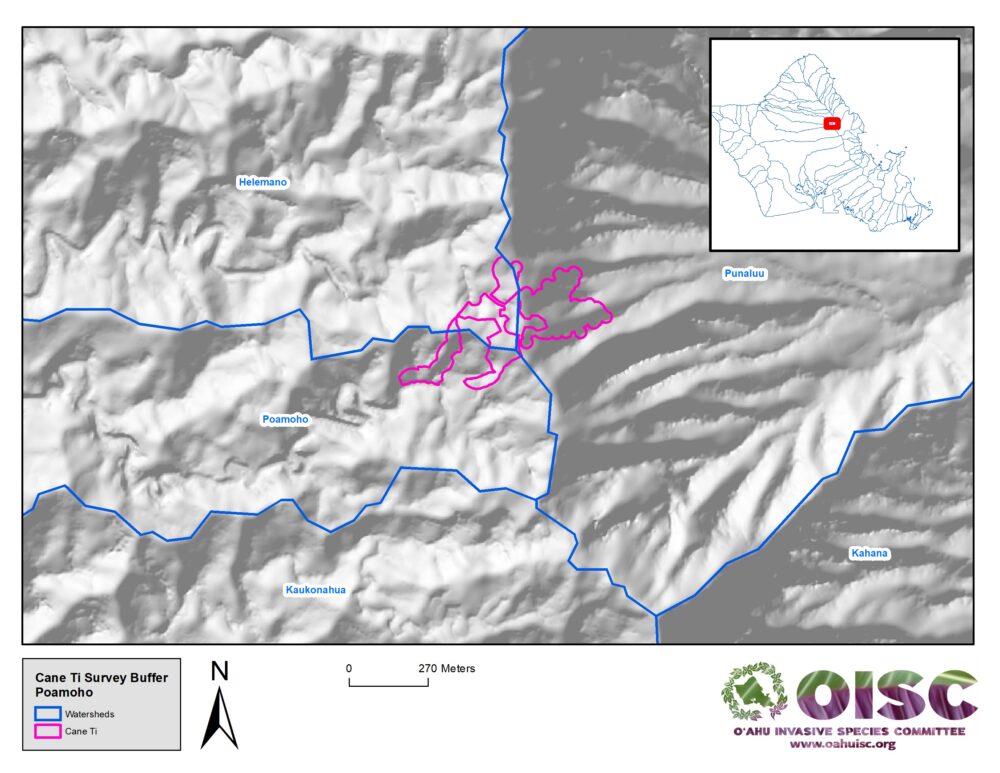
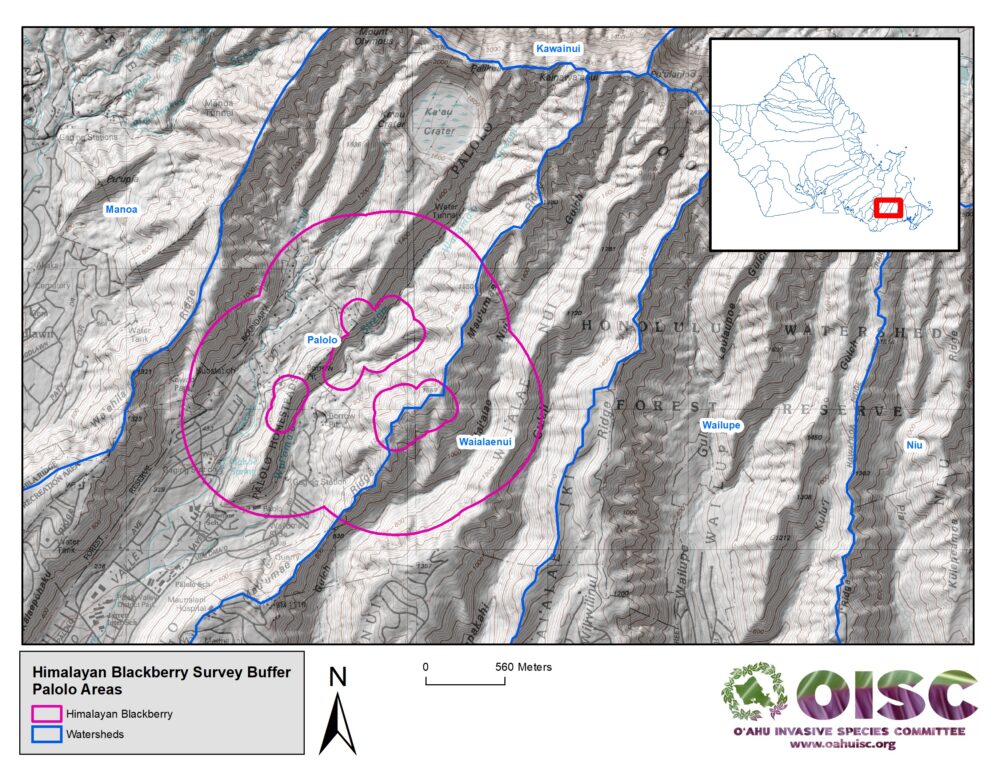
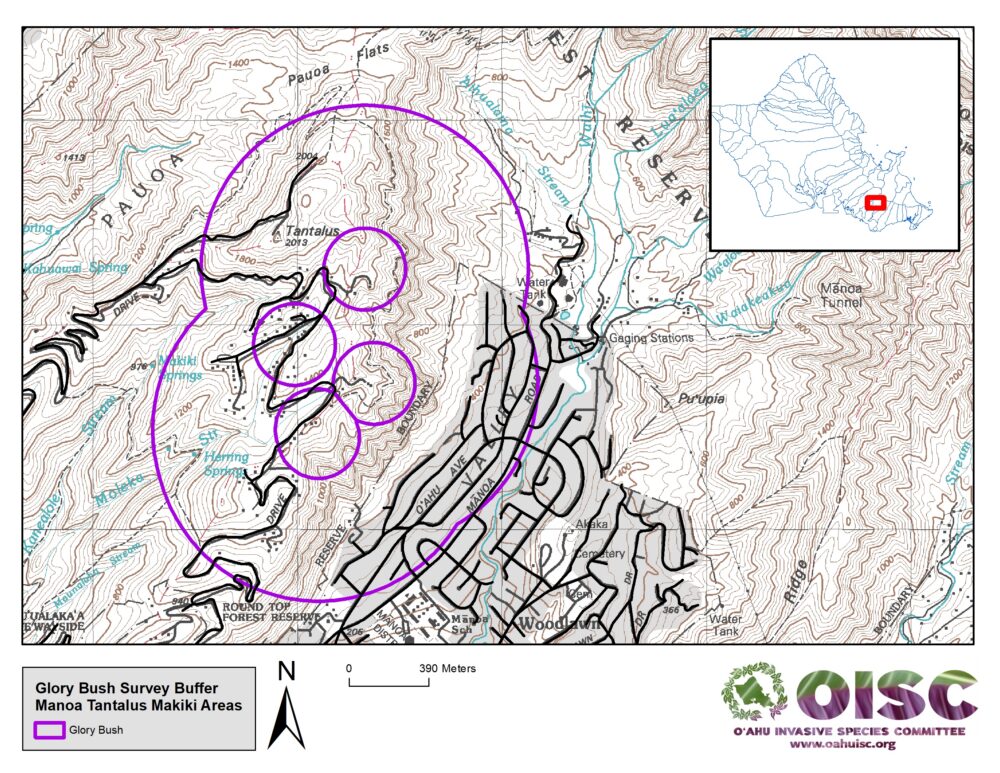
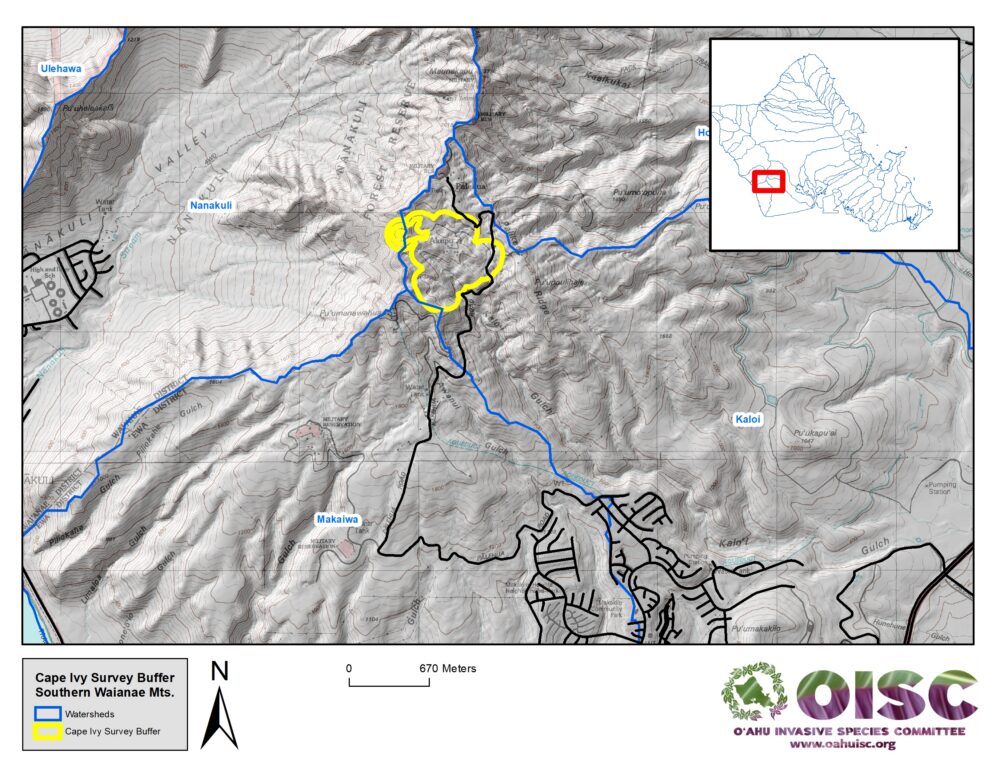
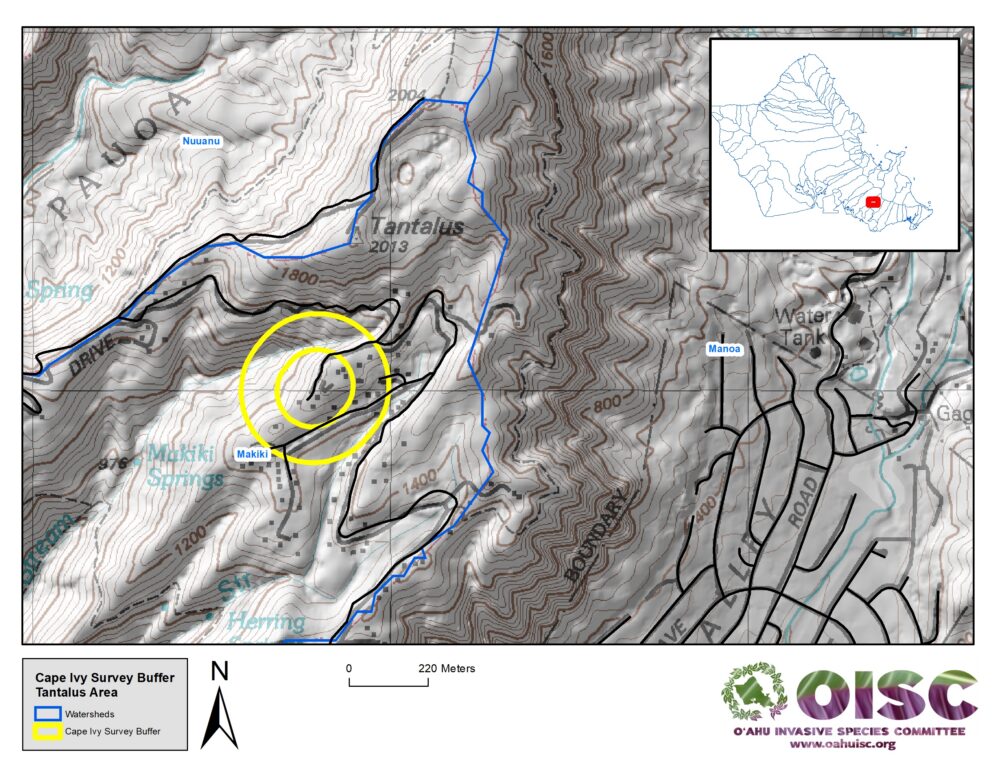
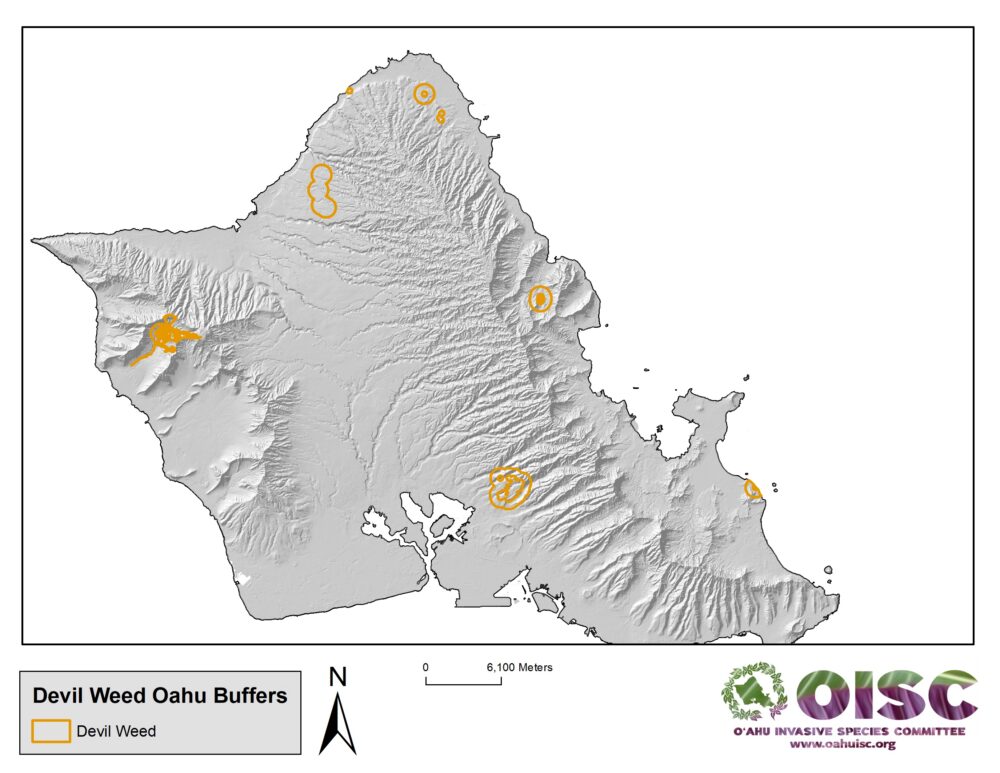
When a target species is identified on Oʻahu, OISC establishes a survey buffer (a perimeter around the find). The survey strategy is based on two key factors:
- Buffer Size (The “Where”): Determined by how the species spreads. For example, plants dispersed by wind or birds require a larger survey area than those that spread only via roots or tubers.
- Survey Frequency (The “When”): Determined by the species’ maturation rate. For instance, miconia matures in about 4 years, so we re-survey those areas every 2–3 years to find and remove new growth before it can seed.
The maps below show our target species’ buffers:
Miconia (Miconia calevescens)

Cane Ti (Tibouchina herbacea)
Himalayan Blackberry (Rubus armeniacus)
Glory Bush (Tibouchina urvilleana)
Cape Ivy (Delairea odorata)
Devil Weed (Chromolaena odorata)
Targets by regions